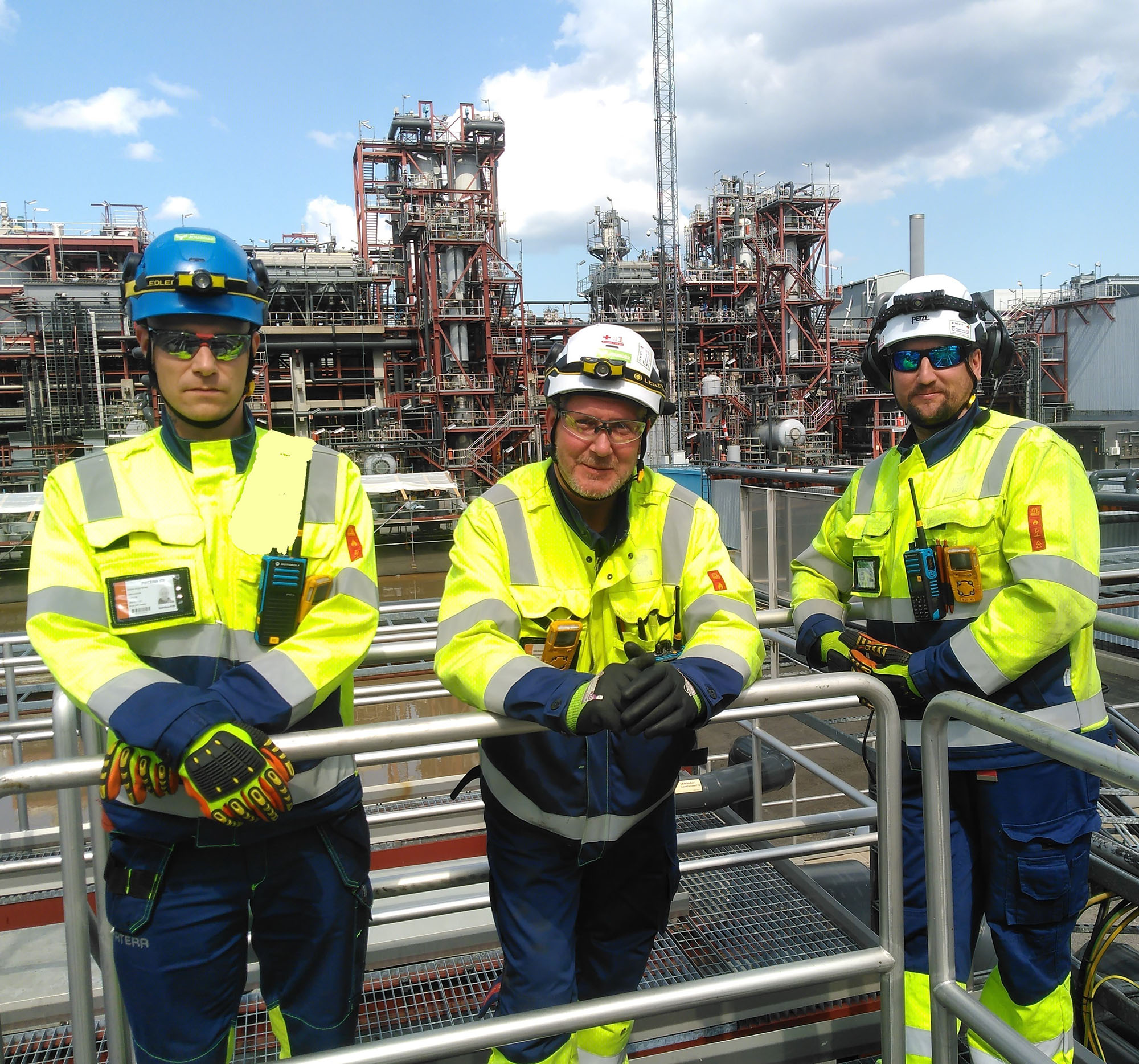
Many industry and construction operators know Patera as an expert in scaffolding safety. However, the same experienced experts are also diverse occupational and environmental safety professionals.
“Scaffolding safety is part of a larger whole, where we look at the safety culture of the site, observe deviations and ensure risk management”, says Mikko Kirjavainen, HSE and scaffolding safety supervisor at Patera.
HSE supervision brings measurable benefits
Patera’s experts are familiar with the requirements of client responsibility and safety systems. This makes them particularly valuable partners for companies that do not have their own construction organisation.
When you order scaffolding safety supervision from Patera, you can also get a comprehensive HSE service from the same address, which covers employee safety and site safety culture, and also takes the environment into account.
In an industry where schedules are getting tighter and technological developments are creating new challenges for site safety, HSE (Health, Safety, Environment) supervision is an essential part of successful operations and every project. Supervision not only meets statutory requirements, but above all ensures the safety of employees and the protection of the environment.
Well-executed HSE supervision also brings measurable business benefits. A safer working environment reduces absences and accidents, which improves productivity and saves costs. At the same time, responsible operations strengthen the company’s reputation and partnerships.
A solution-oriented approach does not seek guilty parties
Patera’s supervisors are known in the field for their solution-oriented approach. A developing attitude is at the heart of supervision. Deviations are taken up boldly, but always in a constructive spirit.
“We take all parties into account and foster a developing atmosphere. We are not looking for guilty parties, but for causal relationships”, Mikko Kirjavainen explains.
The aim on sites is to create an atmosphere in which the parties, from the client to the implementer, are on the same side. According to Kirjavainen, corrective feedback is also well received in practice. When problems are solved immediately on site, the level of safety is improved every step along the way.
Safety starts at the planning table
Patera’s safety expert Tommi Pykäläinen brings his 25 years of experience from the paper and process industry to sites. Among other things, he has worked as a safety manager at large plants and knows how HSE supervision is linked to the success of the entire project.
He notes there are areas for development at all sites. Sites and cultures are different, and people also change, so the supervisor’s work involves continuous development in any case.
“We want to be experts in helping the customer’s entire organisation and working together to complete the site safely”, he says about the supervisor’s task.
Customers can order a full package of risk assessment, monitoring, reporting and employee advice from us. “Site safety is built already in the preliminary planning phase”, Pykäläinen points out.
According to Pykäläinen, the client should already include Patera in the tendering phase, so that the safety requirements are recorded in the contracts from the outset.
“This avoids unnecessary disagreement later. Among large operators, this is already a routine”, he adds.
Patera’s competitive advantage is that all of this comes from one supplier. The customer gets a cost-effective package and at the same time peace of mind that the site is in competent hands.
All deviations are safety risks
Schedule pressures can be tight, especially during annual maintenance. Downtime work may involve special risks, such as external employees moving around the site. This emphasises the importance of advance planning and active risk management.
“All deviations are safety risks”, Kirjavainen points out.
Patera’s supervisors pay special attention to high-risk deviations.
“We include general safety observations in the final HSE supervision report, from the use of protective equipment to the risk of a major accident. Among other things, hot work is performed on almost all sites, which is not always prepared sufficiently”, says Kirjavainen.
According to him, expert services are necessary, as often the clients themselves do not have sufficient resources and special expertise, but they still have the legal responsibilities of the main implementer.
“On many sites, the main implementer’s own organisation has so many different tasks to deal with that a partner is needed. We have special expertise in large-scale projects”, says Kirjavainen.
Compromising on safety is a time bomb
Kirjavainen knows that safety can sometimes be overlooked because of its price, even though compromising on site safety is always a ticking time bomb.
“If price is the only deciding factor, sooner or later something serious will happen. And that will cost a lot”, he says.
However, stakeholders such as owners and insurance companies are creating pressure, and the authorities should also address safety defects at a low threshold. Kirjavainen emphasises the role of the main implementer’s procurement department. Service providers must be required to budget for safety culture. Some large companies require concrete proof of compliance with safety requirements.
In construction and industrial projects, it is common that the main implementer’s representatives have no time to attend every inspection. In that case, Patera’s supervisor acts as their representative. According to Kirjavainen, Patera’s supervisors are typically on the same wavelength as the field organisation. Deviations are taken up in a correct manner and always from the point of view of development. “If deficiencies cannot be corrected on site, we will contact the main implementer and agree on further measures, if necessary. It is our duty to take the matter forward”, says Kirjavainen.
Caption:
Patera’s experienced experts are also diverse occupational and environmental safety professionals. From the left: Mikko Kirjavainen, Kalle Raatikainen and Henrik Liikola.